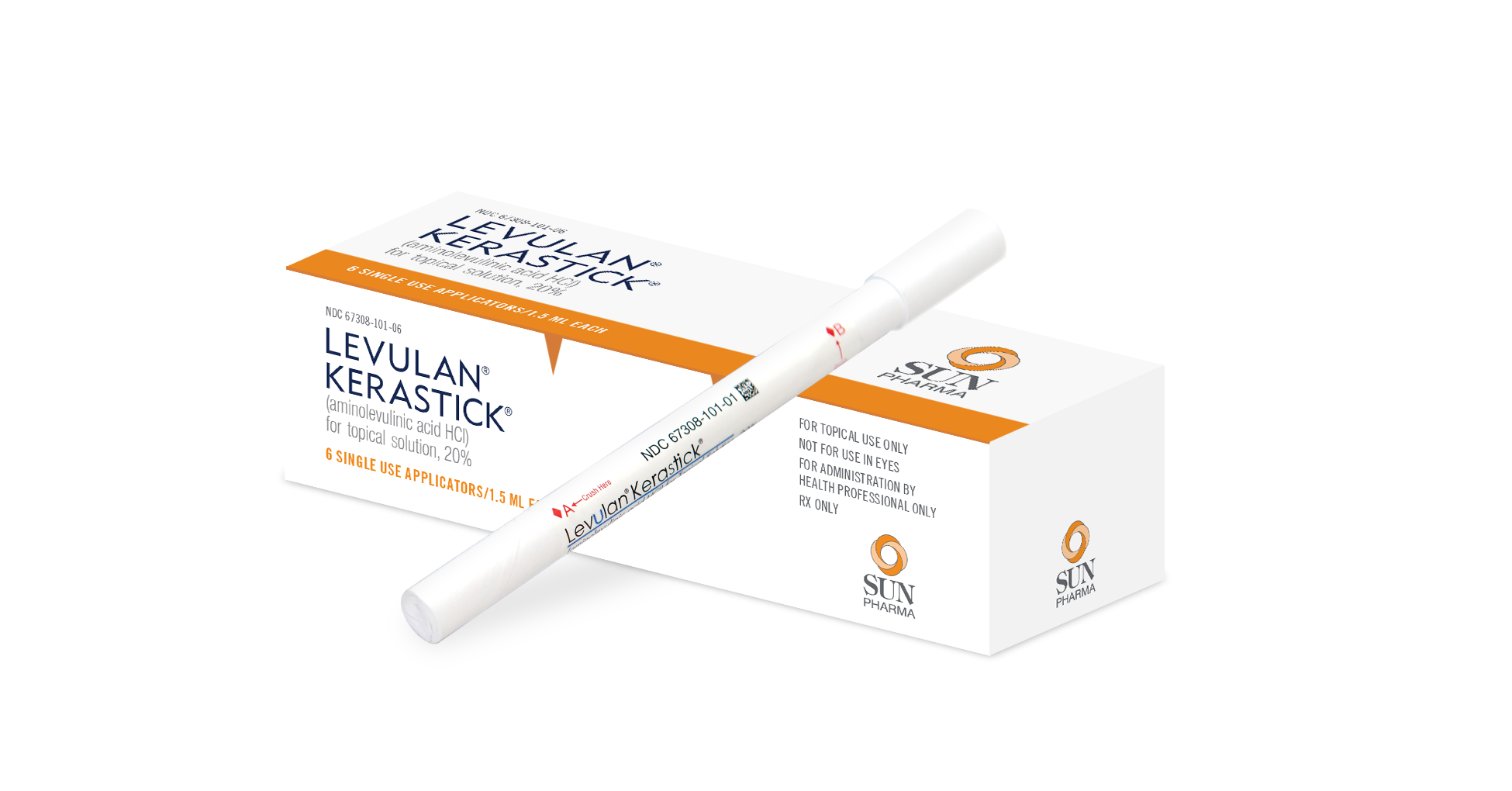
Photodynamic Therapy (PDT) is a highly effective treatment for actinic keratoses (AKs) and certain other skin conditions. During this procedure, a topical solution called aminolevulinic acid (ALA) is applied to the skin and later activated using a specific wavelength of light.
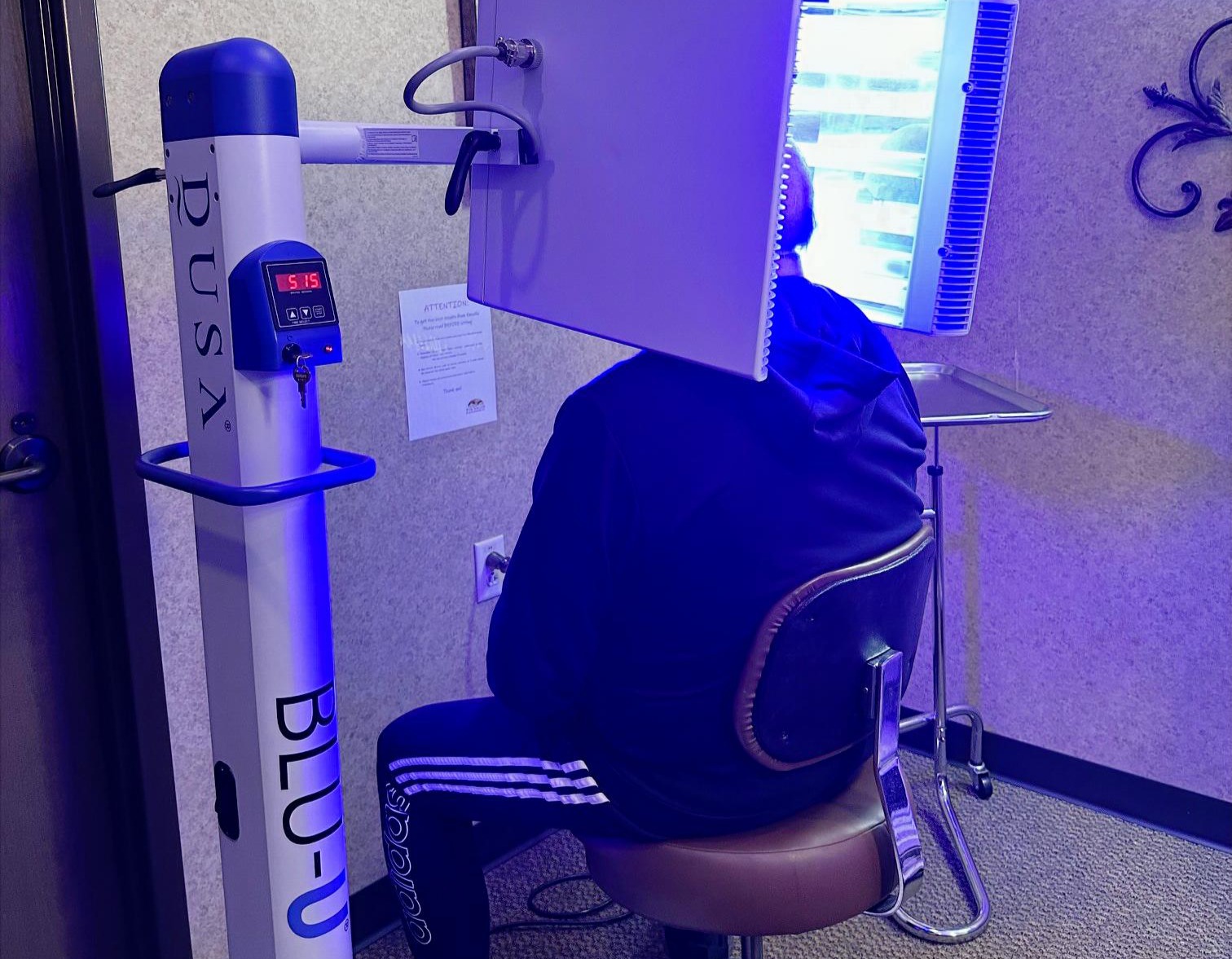
Once applied, the ALA is absorbed by the abnormal or pre-cancerous cells. Inside these cells, it is converted into a light-sensitive compound. When exposed to a specialized blue light (Blu-U® Blue Light Photodynamic Therapy Illuminator), the solution becomes activated and selectively destroys the targeted cells.
In addition to treating actinic keratoses and other pre-cancerous lesions, PDT offers several cosmetic benefits. Patients often notice:
- Improvement in acne and sebaceous gland growths
- Decreased skin oiliness
- Reduced pore size
- Smoother skin texture
- Improvement in rosacea symptoms
What to Expect During Treatment
- Application: ALA topical solution is applied to the treatment area.
- Absorption Period: The solution is allowed to absorb into the skin for up to three hours. During this time, patients may leave the office but must strictly avoid sun exposure and bright indoor light.
- Light Activation: After the absorption period, the area is treated with blue light to activate the ALA.
- Post-Treatment: The skin is cleansed to remove any remaining solution.
Recovery
Following treatment, your skin will be very red and slightly swollen for approximately 3 to 7 days. This is a normal response.
Light Avoidance (Very Important)
- Avoid direct sunlight and bright indoor light for at least 48 hours after treatment.
- Exposure during this time may cause stinging or burning and can worsen redness (erythema) and swelling (edema).
- Sunscreen alone will NOT prevent photosensitivity reactions caused by visible light.
⚠️ Any sun exposure within the first 48 hours can result in severe burning and blistering.
What to Expect
Between 48 to 72 hours, the top layer of treated skin will begin to:
This process reveals fresh, healthier-looking skin underneath.
Sun Protection After 48 Hours
After the initial 48-hour period:
- Wear a wide-brimmed hat when outdoors.
- Apply a broad-spectrum sunscreen (SPF 30 or higher) containing titanium dioxide and/or zinc oxide.
- Reapply sunscreen as directed.
Proper sun protection is essential for healing and achieving the best results.
Potential Risks
The most common side effects include scaling/crusting, hypo/hyper-pigmentation, itching, stinging, and/or burning, erythema and edema. Severe stinging and/or burning at one or more lesions being treated was reported by at least 50% of patients at some time during the treatment.