An expert in rhinoplasty, Dr. David Janssen is helping women and men from places such as Green Bay, Appleton, Fond du Lac and Sheboygan perfect their personal Renaissance. request your consultation using the online form or contact us at 920-233-1540 to find out if rhinoplasty is right for you.

Nose Surgery
Patients choose a rhinoplasty to enhance facial harmony and the proportions of the nose. Also, a rhinoplasty can often correct structural defects in the nose that impair breathing. During this surgery, the surgeon makes incisions inside the nostrils, or at the base of the nose, to provide access to the cartilage and bone for sculpting and reshaping.
Consultations are available in both our Oshkosh & Appleton offices for a $100 consultation fee.
Your Improvements
Rhinoplasty surgery can change:
- Nose size in relation to facial balance
- Width at the bridge or in the size and position of the nostrils
- Profile with visible humps or depressions on the bridge
- Nasal tip that is enlarged or bulbous, drooping, upturned or hooked
- Nostrils that are large, wide, or upturned
- Nasal asymmetry
Patients who desire a more symmetrical nose, should keep in mind that everyone’s face is asymmetric to some degree. Although the goal of the surgeon is always to create facial balance and correct proportion, results may not be completely symmetric.

Best Candidates
Ideal candidates for nose surgery:
- Have completed their facial growth
- Ideal candidates have clear concerns they want to address, such as a dorsal hump (bump on the bridge) or a crooked nose.
- Are physically healthy
- Do not smoke
- Have a positive outlook and realistic goals in mind for improvement of their appearance. They understand that rhinoplasty can improve facial harmony, not create “perfection” or make them look like someone else. Good candidates are seeking enhancement, not drastic transformation.
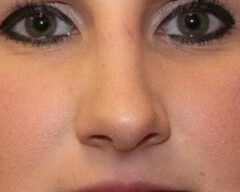
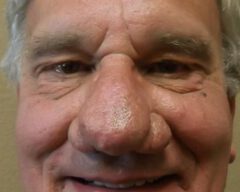
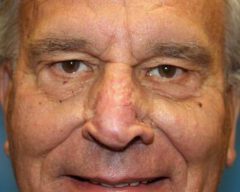
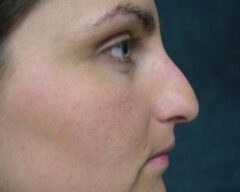
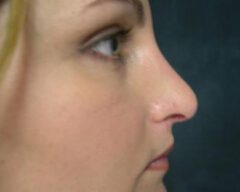
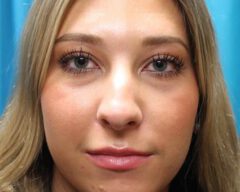
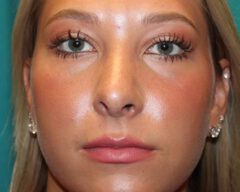
Before & Afters
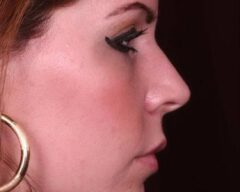
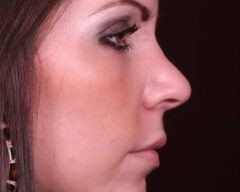
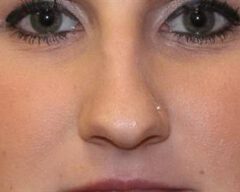
Real Patients real results
What To Expect
Procedure
The anesthesiologist administers anesthesia during the surgical procedure for the patient’s comfort. While options include intravenous sedation or general anesthesia, the anesthesiologist will select the best option.
There are two typical approaches to rhinoplasty. In an open procedure, the surgeon will make an incision across the columella, the narrow strip of tissue that separates the nostrils. Alternatively, in a closed procedure, the surgeon hides the incision inside the nose.
The surgeon will gently raise the skin that covers the nasal bones and cartilage through the incisions, allowing access to reshape the structure of the nose.
It is possible to reduce an overly large nose by removing bone or cartilage. In some cases, rhinoplasty requires the addition of cartilage grafts, most commonly from the septum, the partition in the middle of the nose. Occasionally, your surgeon may graft cartilage from the ear or, rarely, a section of the rib cartilage can be used.
Preparing for Surgery
In preparing for rhinoplasty surgery, patients may be asked to:
- Get a lab test
- Take certain medications or adjust current medications
- Stop smoking
- Avoid taking aspirin, anti-inflammatory drugs, and herbal supplements as they can increase bleeding
At this time, the surgeon may perform rhinoplasty in an accredited office-based surgical facility, a licensed ambulatory surgical center or a hospital. Patients should arrange for someone to drive them to and from surgery and to stay with them for at least the first night following surgery.
Contact Fox Valley Plastic Surgery today at 920-233-1540 to request a consultation.
Recovery
Your surgeon will place a splint and/or packing materials inside the nose and a splint or bandage on the outside of the nose. This supports and protects the new structures during initial healing and recovery. The recovery and downtime prognosis of your rhinoplasty is dependent on your unique case details, such as whether the surgery was performed open or closed, whether any tip work was performed, and whether the nasal bones were broken (osteotomies). For example, patients who undergo open rhinoplasty typically have more edema (swelling) which persists longer compared to patients who undergo closed rhinoplasty. Additionally, an osteotomy usually results in more swelling and bruising.
Patients typically take off one week from work after surgery. Then the surgeon will remove the cast after one week, although the nose will still be swollen. Most patients can gradually return to strenuous activities such as exercising after two weeks. By the end of the second week, the swelling and bruising have usually subsided enough so that the casual observer will not readily notice that the nose has been operated on.
However, to the patient, the nose will look swollen or puffy for several months. The swelling gradually dissipates over the first several months. Consequently, the appearance of the nose changes gradually. By about 3-4 months, the majority of the swelling will be gone, but the nose can look larger in some scenarios, such as in photographs. Ultimately, it can take as long as a year for the final shape to become apparent. Patience is paramount in this type of surgery.
Results
Swelling may come and go during the first year following rhinoplasty surgery. Many patients note swelling is worse in the morning. As such the care team gives patients specific instructions from their surgeon that include:
- How to care for the surgical site
- Medications to apply or take orally to aid healing and reduce the potential for infection
- Specific concerns to look for at the surgical site
- When to follow up with the office
The results of rhinoplasty surgery will be long-lasting. As the body ages, it is natural to have some gradual changes to the face including the nose. But most of your improvement should be relatively permanent. Ultimately, a healthy lifestyle and life-long sun protection will help extend the results.
Potential Risks
Patients will sign consent forms to ensure that they fully understand the procedure and any risks or potential complications. Rhinoplasty surgery risks include:
- Anesthesia risks
- Bleeding (hematoma)
- Infection
- Poor wound healing or scarring
- Change in skin sensation (numbness or pain)
- Nasal septal perforation (a hole in the nasal septum) is rare. Additional surgical treatment may be necessary to repair the septum but it may be impossible to correct this complication
- Difficulty breathing
- Unsatisfactory nasal appearance
- Skin discoloration and swelling
- Possibility of revision
Are you ready to discuss rhinoplasty for yourself? Contact Fox Valley Plastic Surgery today at 920-233-1540 to schedule a consultation.
Pricing
In general, a complete rhinoplasty costs approximately $13,500 and a rhinoplasty tip surgery costs around $9,200. The price includes the surgeon’s fee, the facility fee at the Theda Care Surgery Center, and anesthesia. The pricing is subject to change, and is different if the surgery is done at another facility, if implants are used, if there are unique circumstances surrounding the surgery, etc. If the rhinoplasty is a revision to a surgery that was originally performed elsewhere, there is a surcharge of $2,000 to the surgery price due to the added complexity of the surgery.
Consultation
We offer consultations at both our Oshkosh and Appleton offices. There is a $100 consultation fee, which can be applied toward the cost of your surgery.
During the rhinoplasty consultation patients should be prepared to discuss:
- Surgical goals, with regard to both appearance and breathing
- Medical conditions, drug allergies, and previous medical treatments
- Current medications, vitamins, herbal supplements, alcohol, tobacco, and drug use
- Previous surgeries
The plastic surgeon may also:
- Evaluate the patient’s general health status and any pre-existing health conditions or risk factors
- Examine and measure the face
- Take photographs
- Discuss nose surgery options
- Recommend a course of treatment
- Discuss likely outcomes of a nose surgery and any risks or potential complications
Start Your journey today
Find out more about achieving a beautiful face with board certified plastic surgeon Dr. David Janssen. Contact Fox Valley Plastic Surgery at 920-233-1540 or request your consultation online.