Recovery
After surgery, dressings will be applied, and an elastic bandage or support garment may be used to minimize swelling and support the new chest contour as it heals. In some patients, a small, thin tube may be temporarily placed under the skin to drain any excess blood or fluid that accumulates. You’ll be given detailed post-op instructions that include how to care for the surgical site and drains, medications to apply or take orally to aid healing and reduce the potential for infection, specific concerns to look for at the surgical site, and when to follow up with our office.
Most patients can return to a desk job just a few days after surgery, depending on factors like the technique used, individual pain tolerances and how quickly the body heals. When returning to work and other activities, it’s important to keep the surgical site protected and avoid excessive force, exercise or motion that could stress the healing incisions.
Results
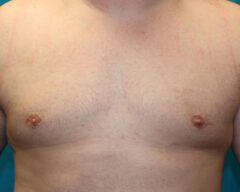
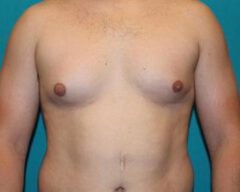
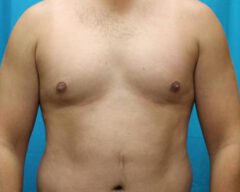
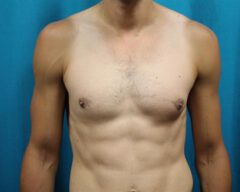
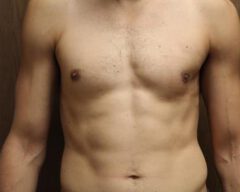
Contour improvements are visible immediately after surgery and usually permanent. Your final results will appear over the next few months as swelling subsides. For many patients, the changes they see as their results develop go beyond an improved physical appearance. Being able to wear fitted clothing comfortably and feel at ease in their own skin are just some of the benefits our patients say matter just as much as the outcome they see in the mirror.
Long-Term Care
Gynecomastia surgery produces permanent results in most cases, but maintaining them comes down to a few straightforward habits. Keeping your weight stable is the most important factor, as significant weight gain after surgery can reintroduce fatty tissue to the chest area. If a medication or substance contributed to your gynecomastia, avoiding it going forward will help protect your outcome. Beyond that, there’s no special maintenance required. Most patients find they simply get to enjoy the results without giving their chest a second thought.