Many patients combine a thigh lift surgery with other procedures. As such, a body lift procedure often involves thigh lift surgery. Dr. David Janssen and Dr. William Doubek have been expertly re-shaping thighs for over 30 years. Experts in thigh lifts, Drs. Janssen and Doubek are helping women and men from places such as Green Bay, Appleton, Fond du Lac, Sheboygan and beyond perfect their personal Renaissance. To find out if thigh lift surgery is right for you, 920-233-1540 Request your consultation using the online form or contact us at 920-233-1540.

Thigh Lift
Patients choose thigh lift surgery to correct sagging skin or loose skin in the inner and outer thighs, as well as remove excess fat deposits and improve thigh contours. If you have good skin elasticity and your goal is to simply remove excess fat, liposuction alone may be the procedure for you. However, if you experience poor skin elasticity, you may choose a combination of liposuction and thigh lift techniques to achieve your goals.

Best Candidates
In general, thigh lift candidates are:
- People whose weight is relatively stable
- Individuals with excess soft tissue along the inner or medial thigh region and/or the outer thigh
- Healthy individuals without medical conditions that impair healing or increase risk of surgery
- Non-smokers Individuals with a positive outlook and realistic expectations, and those willing to quit smoking before and after surgery
Procedure
The anesthesiologist will administer anesthesia during the surgical procedure for the patient’s comfort. Anesthesia options include intravenous sedation or general anesthesia, and the anesthesiologist will recommend the best option. The patient and surgeon preference, the degree of correction, and treatment area determine the incision pattern.
Surgeons use multiple techniques for thigh lift procedures. A common technique involves the surgeon placing the incision in the groin, extending downward, and wrapping around the back of the thigh. The surgeon will then reshape and tighten the underlying tissue matrix, then reduce and re-drape the skin, which results in more proportionate and smoother body contours.
Generally speaking, some patients may qualify for a minimal incision medial thigh lift that involves an incision only in the groin area. Your FVPS plastic surgeon will determine the appropriate incision pattern.
Medial thigh lift incision Improving the contours of the outer thigh may require an incision extending from the groin around the hip. Advanced techniques usually allow surgeons to place incisions in strategic locations where most types of clothing and swimsuits can hide the incisions. However, incisions may be extensive.
Outer thigh lift incision Deep support sutures within underlying tissues help to form the newly shaped contours. The surgeon will use sutures to close the skin incisions.
The smoother and tighter contouring is apparent almost immediately, although initially obscured by swelling and bruising. However, it may take several months for the final results to fully develop. With this many options, it is best to discuss your thigh lift options with the experienced surgeons of Fox Valley Plastic Surgery. Contact Fox Valley Plastic Surgery today at 920-233-1540 to schedule a consultation.
What to Expect
Preparing for Surgery
In preparing for thigh lift surgery, patients may be asked to:
- Get lab testing or a medical evaluation
- Take certain medications or adjust their current medications
- Stop smoking
- Avoid taking aspirin, anti-inflammatory drugs and herbal supplements as they can increase bleeding
Preparing for surgery with a clear, complex-carb rich beverage will keep you strong and enhance your recovery. Drinking ClearFast PreOp prior to your medical procedure is a safe way to speed up recovery time, nourish your body, and reduce post-operative nausea and vomiting. It is available at Hometown Pharmacy on N. Sawyer Street, Oshkosh at $8 a bottle. The recommended dosage is one bottle the night before your surgery once you are in the fasting window, and a second bottle two hours before surgery. However, please get final clearance from your anesthesiologist before taking the beverage at all.
Smoking Warning
Smokers are always at high risk for health troubles, but particularly so during and after surgery. Overall, smokers face longer healing times, blood clots, wounds that break open, and greater risk of infection. For these reasons, FVPS requires that smoking cease one month before and one month after for thigh lift surgeries, which are adversely affected by the decrease in blood flow caused by nicotine. Read our comprehensive explanation of how smoking impacts healing.
FVPS will notify patients if they are affected by this policy. At the pre-operative appointment which normally occurs two days before surgery, patients must take a cotinine test, which detects the presence of nicotine. The quick blood test immediately gives the test results. If the test is positive, the office will cancel the surgery and charge the patient a cancellation fee in accordance with our Financial Policy, which we include in patient paperwork. Smokers, who cannot quit smoking, should not schedule a surgery.
At this time, the surgeon may perform thigh lift surgery in an accredited office-based surgical facility, licensed ambulatory surgical center, or a hospital. If the surgeon performs the thigh lift on an outpatient basis, patients need to arrange for a ride to and from surgery, and to have someone stay with them for at least the first night following surgery.
Initial Recovery
It will be difficult for the patient to walk after surgery. We advise patients to get a walker before surgery to assist in walking. A raised toilet seat is also helpful in the first few days because sitting expands the thighs, which can be very painful. Patients may feel sleepy for the 24 hours after surgery due to the medication that was administered during the operation. It is important that patients not drive, operate machinery, or use power tools in this same time span. Patients should not drink any alcoholic beverages, make any important decisions, or smoke after surgery.
During recovery from thigh lift surgery, your care team will apply dressing or bandages to the incisions. Furthermore, to support the new contours and minimize swelling during healing, they may wrap you in an elastic bandage or compression garment. Also, your surgeon may place small, thin tubes under the skin to drain excess fluid or blood that may collect.
For some patients, this is a painful surgery from which to recover. You will experience swelling, pulsating and throbbing. Elevation is extremely important, as the swelling will go down the entire leg. Additionally, staying hydrated helps reduce swelling. However, the balance between walking and resting/elevating will need to be maintained. The compression garments can cause the thighs to rub and stick to each other. Our care team will give specific instructions that may include how to care for the surgical site and drains, medications to apply or take orally to aid healing and reduce the potential for infection, specific concerns to look for, and when to follow up with the plastic surgeon.
Continued Recovery
It is important that the patients not subject surgical incisions to excessive force, swelling, abrasion, or motion during the time of healing. Patients should restrict clothing choices during the initial recovery until the incisions close. Patients need to cushion the thighs well when resting and elevating them.
The first two weeks are critical after a thigh lift. Removal of tissue from the inner thigh or medial thigh requires 3-4 weeks of healing. It is not uncommon to have small separations in the incision, requiring additional healing time. Most do not require surgical closure as a second follow up operation. Larger thigh reductions may require 4-6 weeks of recovery. The longer the incision, the longer the time required to allow them to heal.
Returning to Work After Surgery
Patients should generally take off at least one month from work. Following a thigh lift, skin quality is dramatically improved both in appearance and feel. Some visible scars will remain, but the overall results are long lasting, provided that the patient maintains a stable weight and general fitness. As the body ages, it is natural to lose some firmness. However, most of the initial improvement should be relatively permanent. Although we expect good results from the procedure, there is no guarantee. In some situations, it may not be possible to achieve optimal results with a single surgical procedure and another surgery may be necessary.
Get your questions answered at a personal consultation. Contact Fox Valley Plastic Surgery today at 920-233-1540 to request a consultation.
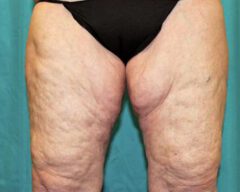
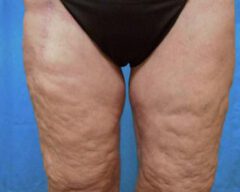
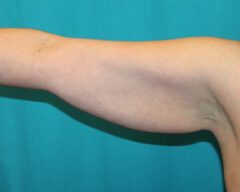
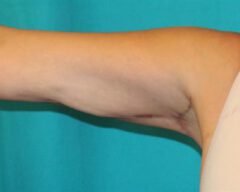
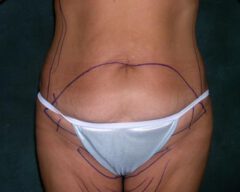
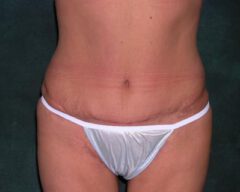
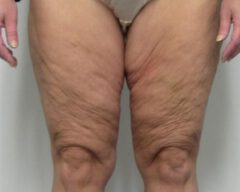
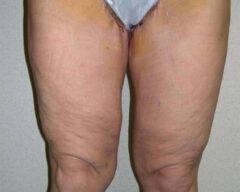
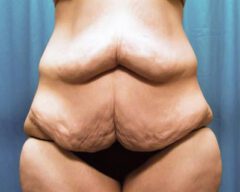
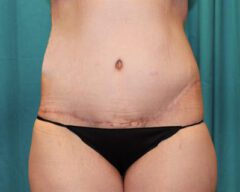
Before & Afters
Real Patients real results
Potential Risks
Patients will be told of the risks of the surgery and will sign consent forms to ensure that they fully understand the procedure. Thigh lift surgery risks include:
- Anesthesia risks
- Poor wound healing
- Bleeding Infection
- Fluid accumulation
- Major wound separation
- Asymmetry
- Deep vein thrombosis, cardiac and pulmonary complications
- Fatty tissue found deep in the skin might die (fat necrosis)
- Persistent pain
- Skin discoloration and/or swelling
- Skin loss
- Sutures may spontaneously surface through the skin, become visible or produce irritation that require removal
- Unfavorable scarring
- Numbness or other changes in skin sensation
- Recurrent looseness of skin
- Possibility of revision surgery
Pricing
Insurance does not cover the cost of a thigh lift surgery. In general, a thigh lift costs $11,250 – $13,525 depending on the incision. The price includes the surgeon’s fee, the facility fee at the Theda Care Surgery Center, and anesthesia. The pricing is subject to change, and will change if the surgery is done at another facility, and if there are unique circumstances surrounding the surgery, etc.
Additionally, FVPS offers discounts for cases that involve multiple cosmetic procedures: 15% off the surgeon’s fee for the 2nd cosmetic procedure, and 30% off the surgeon’s fee for the 3rd procedure. The surgery center discounts the operating room fee 50% for the 2nd+ procedure, while anesthesiologists base their fees solely on time. There are zero interest financing options available through Care Credit and Alphaeon Credit. (Additional discounts not mentioned here may be available).
To set up your appointment and learn more about a thigh lift, request a consultation online or call the office at (920) 233-1540.
Consultation
We offer consultations at both our Oshkosh and Appleton offices. There is a $100 consultation fee, which can be applied toward the cost of your surgery.
During a thigh lift surgery consultation, patients should be prepared to discuss:
- Their surgical goals
- Medical conditions, drug allergies and medical treatments
- Current medications, vitamins, herbal supplements, alcohol, tobacco and drug use
- Previous surgeries
The plastic surgeon will also:
- Evaluate the patient’s general health status and any pre-existing health conditions or risk factors
- Take photographs
- Discuss the patient’s options
- Discuss likely outcomes of thigh lift surgery and any risks or potential complications
Start Your journey today
Explore whether or not a thigh lift procedure is right for you by calling 920-233-1540. Our board certified Wisconsin plastic surgeons are helping women from all over the country to perfect their personal Renaissance. Request your consultation today.