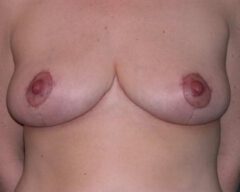
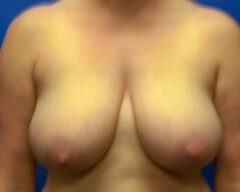
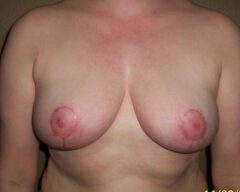
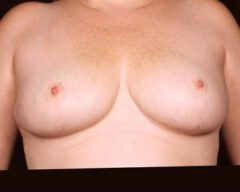
Procedure
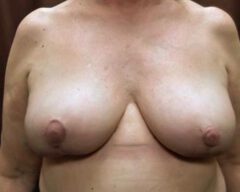
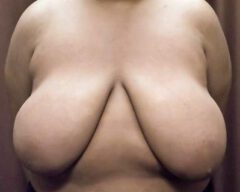
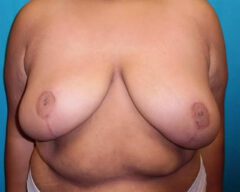
Breast reduction surgery is usually performed through incisions on the breasts with surgical removal of the excess fat, glandular tissue and skin. In some cases, excess fat may be removed through liposuction in conjunction with the excision techniques. If breast size is largely due to fatty tissue and excess skin is not a factor, liposuction alone may be used in the procedure for breast reduction.
The technique used to reduce breast size will be determined by the patient’s individual condition, breast composition, the amount of reduction desired, personal preferences and the surgeon’s advice. Anesthesia is administered for the patient’s comfort during breast reduction surgery. The choices include intravenous sedation and general anesthesia. The anesthesiologist will recommend the best choice.
Incision options include:
- A circular pattern around the areola
- A keyhole or racquet-shaped pattern with an incision around the areola and vertically down to the breast crease
- An inverted T or anchor-shaped incision pattern
After the incision is made, the nipple (which remains tethered to its original blood and nerve supply) is then repositioned. The areola is reduced by excising skin at the perimeter, if necessary. Underlying breast tissue is reduced, lifted and shaped. Occasionally, for extremely large pendulous breasts, the nipple and areola may need to be removed and transplanted to a higher position on the breast (free nipple graft).
The incisions are brought together to reshape the now smaller breast. Sutures are layered deep within the breast tissue to create and support the newly shaped breasts; sutures, skin adhesives and/or surgical tape close the skin. Incision lines are visible and permanent, although usually well concealed beneath a swimsuit or bra. In most cases the scars will fade and significantly improve over time. The results of breast reduction surgery are immediately visible.
Discuss your breast reduction options with the experienced surgeons of Fox Valley Plastic Surgery. Contact Fox Valley Plastic Surgery today at 920-233-1540 to schedule a consultation.
Preparing for Surgery
Prior to surgery, patients may be asked to:
- Get lab testing or a medical evaluation
- Take certain medications or adjust current medications
- Get a baseline mammogram before surgery and another one after surgery to help detect any future changes in breast tissue
- Stop smoking well in advance of breast reduction surgery
- Avoid taking aspirin, anti-inflammatory drugs and herbal supplements as they can increase bleeding
Patients will receive special instructions to cover what to do on the day of surgery, post-operative care and follow-up. Breast reduction surgery may be performed in an accredited office-based surgical center, outpatient/ambulatory surgical center, or a hospital.
Smokers are always at high risk for health troubles, but particularly so during and after surgery. Smokers face longer healing times, blood clots, wounds that break open, and greater risk of infection. For these reasons, FVPS requires that smoking cease one month before and one month after for breast reduction surgeries, which are adversely effected by the decrease in blood flow caused by nicotine. Read our comprehensive explanation of how smoking impacts healing.
FVPS will notify patients if they are affected by this policy. At the pre-operative appointment which normally occurs two days before surgery, patients must take a cotinine test, which detects the presence of nicotine. Test results are immediately available with this quick blood test. If the test is positive, then surgery will be cancelled and the patient will be charged a cancellation fee in accordance with our Financial Policy, which is included in patient paperwork. Smokers, who cannot quit smoking, should not schedule a surgery.
Recovery
When the breast reduction procedure is complete, dressings or bandages will be applied to the incisions. An elastic bandage or support bra may be worn to minimize swelling and support the breasts as they heal. A small, thin tube may be temporarily placed under the skin to drain any excess blood or fluid that may collect.
Following the physician’s instructions is vital to the success of any surgery. It is important that the surgical incisions are not subjected to excessive force, abrasion, or motion during the time of healing. The doctor will give patients specific post operative instructions.
The ability to return to work at a desk job depends on the patient’s pain tolerance and motivation. The patient should take off 5-7 days before returning to her desk job. The patient can return to her desk job on the 5th day only if she is highly motivated; there will still be discomfort. A patient should not return to work any earlier because the patient may still be using narcotics. Strenuous activity should be avoided for the first two weeks. Lifting anything heavier than 10 pounds should be avoided for the first 6 weeks.
Are you ready to discuss breast reduction for yourself? Contact Fox Valley Plastic Surgery today at 920-233-1540 to schedule a consultation.
Potential Risks
Patients will sign consent forms to ensure that they fully understand the procedure and any risks or potential complications. The risks of breast reduction include:
- Unfavorable scarring
- Infection
- Changes in nipple or breast sensation, which may be temporary or permanent
- Anesthesia risks
- Bleeding (hematoma)
- Blood clots
- Poor wound healing
- Breast contour and shape irregularities
- Skin discoloration, permanent pigmentation changes, swelling and bruising
- Damage to deeper structures – such as nerves, blood vessels, muscles, and lungs – can occur and may be temporary or permanent
- Breast asymmetry
- Fluid accumulation
- Excessive firmness of the breast
- Potential inability to breastfeed
- Potential loss of skin/tissue of breast where incisions meet each other
- Potential, partial or total loss of nipple and areola
- Deep vein thrombosis, cardiac and pulmonary complications
- Pain, which may persist
- Allergies to tape, suture materials and glues, blood products, topical preparations or injectable agents
- Fatty tissue deep in the skin could die (fat necrosis)
- Possibility of revision