
What Is a Breast Lift?

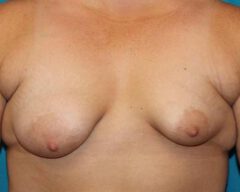
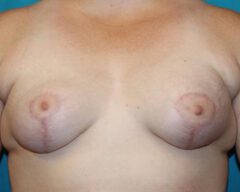
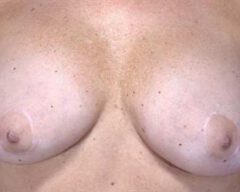
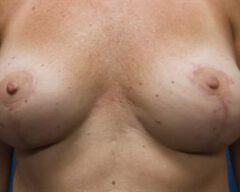
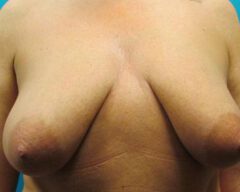
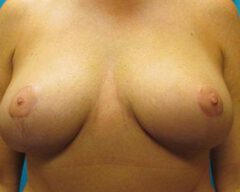
A breast lift, also known as a mastopexy, raises the breasts by removing excess skin and tightening the surrounding tissue. This reshapes and supports the new breast contour. A breast lift can also reduce the size of the areola, which may have enlarged over time.

In some cases, patient combine a breast lift with augmentation to restore fullness and volume. A breast lift gives a profile that is renewed, youthful and enlivened.

Best Candidates

Candidates for breast lift surgery:

  • Are physically healthy and maintain a stable weight.
  • Do not smoke.
  • Are bothered by the feeling that their breasts sag or have lost shape and volume.
  • Have breasts which have a flat, elongated shape or are pendulous.
  • Feel they have unsupported nipples which fall below the breast crease.
  • Have nipples and areolas pointing downward.
  • Experience stretched skin and enlarged areolas.
  • Have one breast lower than the other.

Patient should only consider breast surgery after childbearing. Changes to the breasts during pregnancy can minimize or reverse the breast lift. To be noted: significant weight loss after breast surgery can negatively impact breast lift results.

Breast lift surgery does not significantly change the size of the breasts or round out the upper part of the breast. For example, if the goal is fuller breasts, consider breast augmentation along with breast lift surgery. Similarly, if your goal is smaller breasts, consider combining breast lift and breast reduction surgery.

Click here to deep dive with the Fox Valley Plastic Surgery team and learn all about your Breast Lift journey.

Procedure for Breast Lift

Drs. Janssen and Doubek perform breast lifts with a variety of incision patterns and techniques. There are many factors that determine the best technique for the patient, including breast size and shape, size and position of areolas, degree of skin sagging, skin quality and elasticity, and the amount of extra skin.

The anesthesiologist administers anesthesia during the surgical procedure for the patient’s comfort. Anesthesia options include intravenous sedation or general anesthesia, and the anesthesiologist will select the best option.

Incision Patterns

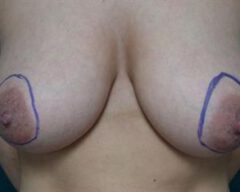
There are three common incision patterns that best suit the patient’s anatomy: around the areola, around the areola and vertically down from the areola to the breast crease, and around the areola, vertically down from the breast crease and horizontally along the breast crease.

The surgeon will make an incision to begin the surgery. After the incision is made, the surgeon will lift and reshape the underlying breast tissue to improve breast contour and firmness. Next, the surgeon will reposition the nipple and areola to a natural, more youthful height. If necessary, the surgeon will excise skin at the perimeter to reduce enlarged areolas. To compensate for a loss of elasticity, the surgeon will remove excess breast skin. Finally, the surgeon will close the incisions as they tighten the remaining skin.

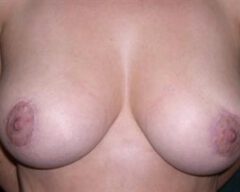
Some incision lines resulting from breast lift are concealed in the natural breast contours; however, others are visible on the breast surface. Incision lines are permanent, but in most cases will fade and significantly improve over time.

To create and support the newly shapes breasts, your Fox Valley Plastic Surgeon will layer sutures deep within the breast tissue. The surgeon will close the skin using sutures, skin adhesives and/or surgical tape.

Interested in a Breast Lift?

Allow our experienced, highly skilled and caring surgeons to discuss your breast lift options with you! Call us today at 920-233-1540 to schedule a consultation.
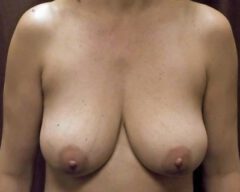
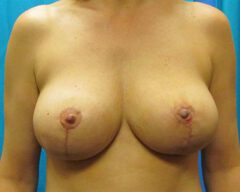
Procedure for Breast Lift with Implants

The degree of breast sagging and the degree of enlargement desired by the patient will help the surgeon determine the technique best used to achieve the breast lift and augmentation. In general, most women want large implants with their breast lifts. However, this is challenging for the surgeon. For example, comparing breasts to an envelope, combining a breast augmentation with a breast lift is similar to wanting to overstuff the envelope while also decreasing the size of the envelope. Hence, it is difficult for the surgeon to complete both procedures in one operation.

However, our surgeons have devised several techniques combine a breast lift with implants. A lot of combinations are possible between muscle, gland and skin, but the basic principles are the same.

One Stage Approach

The most common problem encountered in a breast lift with implants done in one stage is the effect of the implant on the tissue. Patients can expect an optimal result when the tissues are very good and a small implant is used. In cases where the muscle is thin, the sheer pressure of the implant will further stretch, thin, and deform the skin.

However, it is difficult to know definitively the condition of the tissues before the surgery. Surgeons cannot predict how the tissues will tolerate and support the implant. The bigger the implant, the more difficult the procedure becomes. In a one stage breast augmentation/breast lift approach, the rate of touch-up or secondary procedure an be as high as 30%.

Two Stage Approach

For the reasons outlined above, the two stage approach is the most reliable method. However, women can be hesitant about the idea of a two stage procedure. It is two surgeries, two recovery periods and costs significantly more. Even so, there is a big upside: much higher chance of good results, less scarring, a minimization of tissue damage and complications. Additionally, the surgeon can make any adjustment to fine-tune the shape, size, level, and symmetry between the two breasts at the time of the second surgery.

In the first stage, the surgeon will place the implants under the muscle (the breast augmentation). Two months later, the surgeon performs the second stage (the breast lift). The surgeon can perform a more predictable and stable breast lift because the  scar tissue has formed around the implant. Most of the reshaping of the breast is achieved intraoperatively. The surgeon will use a submuscular pocket to minimize the dissection and the risk of complications.

One Stage Approach with Planned Revision

Watch Dr. Janssen’s video regarding the complexity of performing a good, tight breast lift with breast augmentation in one surgery. It is extremely difficult to both increase the content of the pocket while decreasing the size of the pocket, the envelope concept discussed above. To combat this challenge, Fox Valley Plastic Surgery has devised a unique method in which the surgeon performs the breast augmentation and breast lift in one procedure, but with a planned minor revision in 4-6 months. The position and size of the implant are the most important considerations for this method.

The surgeons are conservative on the excision of the skin and the lower pole of the breast. The method that Dr. Janssen has developed, leaves the skin loose in the lower pole of the breast and allows it to heal for 4-6 months, making it a very safe method of tackling the difficult procedure. The revision is an office-based visit under local anesthesia. The surgeon will tighten the skin to give the patient a wonderful long-term result without risk to the implants. Not only does this method present less risk of complications than trying to do the procedure in one stage, but it also saves the patient thousands of dollars over the two stage method.

For more information regarding breast augmentation with a breast lift, please watch Dr. Janssen’s video “Surgical Challenge of a Breast Lift with Implants.”

What To Expect

Preparing for Surgery

  • Patients must stop smoking one month prior to surgery.
  • Patients must stop all aspirin and blood thinners 10 days prior.
  • We require a baseline mammogram within the 1 year prior to surgery.
  • Be sure to arrange for someone to drive you to and from surgery, and to stay with you for at least the first night following surgery.

Smoking Warning

Smokers are always at high risk for health troubles, but particularly so during and after surgery. Smokers face longer healing times, blood clots, wounds that break open, and greater risk of infection. For these reasons, FVPS requires that smoking cease one month before and one month after breast lift surgeries. Nicotine decreases blood flow which has an adverse effect on healing. Read our comprehensive explanation of how smoking impacts healing.

FVPS will notify patients if they are affected by this policy. At the pre-operative appointment, normally two days before surgery, patients must take a cotinine test which detects the presence of nicotine. Test results are immediately available and, if positive, we will cancel the surgery and charge the patient a cancellation fee in accordance with our Financial Policy included in patient paperwork. Please do not schedule surgery if you are unable to quit smoking!

Recovery

Your surgery team will apply dressings or bandages to the incisions during the breast lift recovery. To minimize the swelling and support the breasts as they heal, patients will need to wear an elastic bandage or support bra. The surgeon may temporarily place a small, thin tube under the skin to drain any excess blood or fluid that may collect.

While it is important to rest frequently during the first week, patients must walk 15-20 minutes four times a day to help to prevent blood clots from forming. Two days after surgery, daily showering may commence. Patients may remove the gauze dressings, but the adhesive strips should remain in place for about two weeks. Clean the incisions with soap and water, and pat dry.

Overview of Healing

The incisions may have a puckered or skin pleated appearance, which disappears in a few weeks. Bruising is common in the lower part of the breast, which fades in approximately ten days. There may be an alteration in nipple areola sensibility, either increased or decreased. It may take months for this to disappear.

Do not subject the surgical incisions to excessive force, swelling, abrasion, or motion during the time of healing. The final results of the breast lift will appear over the next few months as breast shape and position continue to settle. Incision lines are permanent but will continue to fade over time. The results are long lasting but, over time, the breasts continue to change due to aging and gravity.

Returning to Work

Breast lift patients typically take off 1-3 days before returning to a desk job, however this depends on the individual’s healing abilities, pain tolerance and motivation. While you can return to your desk job the day after surgery if highly motivated, you should know you will feel uncomfortable. We absolutely forbid lifting for the first 5-7 days, so we do not suggest an early return to work for patients with jobs involving such activities. Patients should avoid strenuous activity for the first two weeks. Also, patients should avoid lifting anything heavier than 10 pounds the first 6 weeks.

Potential Risks

Patients will be asked to sign consent forms to ensure that they fully understand the procedure and any breast lift risks and potential complications. Breast lift risks include:

  • Anesthesia risks
  • Bleeding or hematoma formation
  • Infection
  • Poor healing of incisions
  • Changes in nipple or breast sensation, which may be temporary or permanent
  • Breast contour and shape irregularities
  • Breast asymmetry
  • Fatty tissue found deep in the skin might die (fat necrosis)
  • Fluid accumulation
  • Potential partial or total loss of nipple and areola
  • Deep vein thrombosis, cardiac and pulmonary complications
  • Possibility of revision

Consultation

There is a $100 non-refundable cosmetic consultation fee. However, this fee can be applied towards the cost of the procedure.  During a breast lift consultation, be prepared to discuss:

  • Medical conditions, drug allergies and medical treatments
  • Current medications, vitamins, herbal supplements, alcohol, tobacco and drug use
  • Previous surgeries
  • If you have a family history of breast cancer
  • The results of any mammograms or previous biopsies

The surgeon will also:

  • Evaluate your general health status and any pre-existing health conditions or risk factors
  • Examine your breasts and may take detailed measurements of their size and shape, skin quality, and placement of your nipples and areolas
  • Take photographs
  • Discuss your options and recommend a course of treatment
  • Discuss likely outcomes of breast lift surgery and any risks or potential complications

Start Your journey today

Reclaim your youthful profile with a breast lift. Those from Milwaukee, Appleton, Madison, Neenah and beyond are perfecting their personal Renaissance with the help of our board certified Wisconsin plastic surgeons. Contact Dr. David Janssen or Dr. William Doubek at 920-233-1540 or request your consultation online.

Book a Consulation

Request Your Cosmetic Surgery Consultation

MM slash DD slash YYYY
Newsletter Option
Terms

By checking the box on the contact form, you agree to the Terms of Use listed here: Communications through our website or via email are not encrypted and are not necessarily secure. Use of the internet or email is for your convenience only, and by using them, you assume the risk of unauthorized use. By checking this box you hereby agree to hold , its doctors and affiliates, harmless from any hacking or any other unauthorized use of your personal information by outside parties.