Dr. David Janssen is an expert in neck lift procedures and helps women and men from places such as Green Bay, Appleton, Fond du Lac, Sheboygan and beyond perfect their personal Renaissance. request your consultation using our online form or contact us at 920-233-1540 and let’s explore your facial rejuvenation options. Consultations are available in both our Oshkosh & Appleton offices. There is a $100 consultation fee.

Neck Lift
Some people are blessed with a young-looking face: taut, supple, and relatively line free. The neck, unfortunately, might tell a different story, with vertical band lines and sagging skin. For example, this can be particularly true for those individuals who have undergone significant weight fluctuations over their lives. Therefore, Fox Valley Plastic Surgery in Wisconsin offers neck lift surgery, or rhytidectomy, as an effective way to restore a more youthful appearance to the entire face.
What Is a Neck Lift?
A neck lift, or lower rhytidectomy, is a surgical procedure which improves visible signs of aging in the jawline and neck, such as:
- Excess fat and skin relaxation in the lower face that creates jowls
- Excess fatty deposits under the chin
- Loose neck skin
- Muscle banding in the neck, which creates abnormal contours
Individuals experience the loss of youthful contours in the face and deck due to a variety of factors, including heredity, gravity, environmental conditions and stress. An elegant neck contour is not only associated with a youthful appearance, but also with health and vitality. Non-surgical rejuvenation treatments cannot achieve the same results as a neck lift, but may help delay the time in which a neck lift becomes appropriate.
Furthermore, a neck lift is always combined with another facial surgery, such as a face lift. Eye surgery, liposuction and a laser profractional are common additions too. Normally, a neck lift alone does not accomplish the goals of most patients. For example, if the neck is loose, the face is consequently loose too. Hence, when the neck is opened for a neck lift, it is convenient to also perform a face lift at the same time. It is better to endure one recovery period with multiple procedures than to have multiple procedures at different times.
Not only is there a cost savings, but there is also less total time spent in recovery. Patient satisfaction is much greater when there is full correction, so we only offer neck lifts in conjunction with other surgical procedures.

Best Candidates
In general, good candidates for a lower neck lift include:
- Healthy individuals who do not have medical conditions which impair healing
- Non-smokers
- Individuals with a positive outlook and realistic expectations
Aging of the neck is usually a combination of loose skin, muscle and excess fat. This combination results in a “turkey gobbler” for which a neck lift can be beneficial. Notably, a surgeon can perform a neck lift on those who feel the need to improve their neck contour. Thus, typical patients range between the ages of 40 and 70.
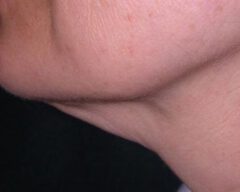
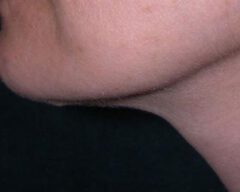
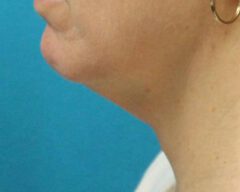
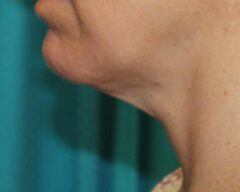
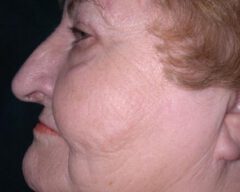
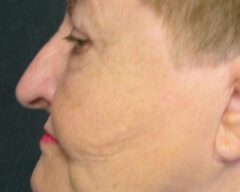
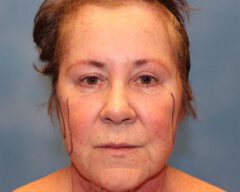

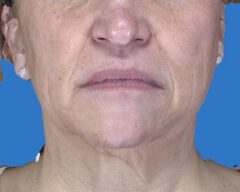

Before & Afters
Real Patients real results
What To Expect
Preparing for Surgery
In preparing for neck lift surgery, we ask patients to:
- Get lab testing or a medical evaluation
- Take certain medications or adjust their current medications
- Stop smoking
- Avoid taking aspirin, anti-inflammatory drugs, and herbal supplements as they can increase bleeding
Special instructions will cover what to do on the night before and morning of surgery, the use of anesthesia during the necklift, and post-operative care and follow-up. At this time, the surgeon may perform a necklift in an accredited office-based surgical facility, licensed ambulatory surgical center, or a hospital. Patients need to have someone to drive them to and from surgery and to stay with them for at least the first night following surgery.
Procedure
To begin the procedure, the anesthesiologist will administer anesthesia. The anesthesiologist will determine the best choice of anesthesia. Depending on the degree of change desired by the patient, the incision may be a traditional neck lift incision or a lateral skin displacement neck lift.
The surgeon makes a traditional neck lift incision in the hairline at the level of the sideburn. Then he will continue down and around the ear, and end in the posterior hair. Then the surgeon may sculpt or redistribute fat from the jowls and neck. Next, he will reposition the tissue underlying the neck skin and tighten the platysma muscle inwards. He will re-drape the skin over the uplifted contours and trim excess skin. Then he makes a separate incision under the chin for liposuction of this area and for repair of the muscle. Finally, the surgeon closes the incision with sutures or skin adhesives.
Option for Lateral Skin Platysma Displacement
Our practice uses a new technique called lateral skin platysma displacement (LSD). We are strong proponents of the LSD method because it has a shorter recovery period and better outcomes than the traditional neck lift method. Remarkably, it only costs $500 more. During LSD surgery, the surgeon will begin the incision in the same area as a traditional neck lift, but end it much deeper into the posterior hair. Additionally, there is no submental scar because the surgeon does not make an incision under the skin. The surgeon tightens the platysma bands outwards with sutures. By using this technique, the anatomy of the muscle is skewed and displaced in a more lateral position, which will decrease the risk of recurring bands.
Dr. Janssen will close the incision lines with sutures and skin glue. Your sutures may be dissolvable, or you may need to come in to have them removed after a few days. Once they are healed, the hairline and the natural contours of your ears will conceal your incision lines. Additionally, the visible improvements of a neck lift appear as your swelling and bruising subside.
Discuss your neck lift options with Dr. Janssen of Fox Valley Plastic Surgery. Contact Fox Valley Plastic Surgery today at 920-233-1540 to schedule a consultation.
Recovery
After your surgery, your medical team will gently place a bandage around your neck and face to minimize swelling and bruising. Patients are given specific instructions that include how to care for your surgical site, medications to apply or take orally to aid healing and reduce the potential for infection, specific concerns to look for at the surgical site, and when to follow up with our office. Additionally, to reduce post-operative swelling, you will wear a medical compression band. Patients must wear the medical compression band day and night for at least five days, and then only at night for a longer period of recovery time.
It is of utmost importance that you not subject your surgical incisions to excessive force, abrasion, or motion during the time of healing. You must wear clothing that does not go over the head. We recommend you keep your head elevated above the heart to minimize swelling. We advise against any excessive twisting or bending of the neck. Also, do not apply ice to the neck as this compromises blood flow and results in skin death. We give all this information and more to patients in their paperwork.
Above all, recovery from a neck lift takes time. Most patients find themselves ready to return to work at a desk job in 5-7 days. Our patients who are physically active will need to wait at least three weeks to resume activities. It will take several weeks to months for swelling to fully dissipate, and up to six months for incision lines to mature. As always, life-long sun protection and a healthy lifestyle will help extend the results of your neck lift.
Potential Risks
Patients will sign consent forms prior to the surgery to ensure that they fully understand the procedure and any risks and potential complications. Neck lift surgery risks include:
- Anesthesia risks
- Bleeding
- Temporary or permanent hair loss along the incisions
- Facial asymmetry
- Rare nerve injury that could cause weakness of the lower lip
- Fluid accumulation (hematoma)
- Infection
- Unfavorable scarring
- Prolonged swelling
- Skin irregularities and discoloration
- Skin loss
- Sutures may spontaneously surface through the skin, become visible or produce irritation and require removal
- Numbness or other changes in skin sensation
- Persistent pain
- Poor wound healing
- Rare risk of deep venous thrombosis
- Unsatisfactory results which may require a revision

Pricing
At this time, insurance does not cover the cost of neck lift surgeries. In general, a neck lift with lateral skin platysma displacement (LSD) and a lower face lift costs $15,500. The price includes the surgeon’s fee, the facility fee at the Theda Care Surgery Center, and anesthesia. The pricing is subject to change, and will change if the surgery is done at another facility, and if there are unique circumstances surrounding the surgery, etc.
Additionally, FVPS offers discounts for multiple cosmetic procedures: 15% off the surgeon’s fee for the 2nd cosmetic procedure, and 30% off the surgeon’s fee for the 3rd procedure. The surgery center discounts the operating room 50% for the 2nd+ procedure, while anesthesiologists base their fees solely on time. There are zero interest financing options available through Care Credit and Alphaeon Credit. (Additional discounts not mentioned here may be available).
A neck lift alone often does not fully address a patient’s concerns. In many cases, if the neck shows laxity, the lower face does as well. For that reason, when surgery is performed to improve the neck, it is often practical to combine it with a facelift. Undergoing multiple procedures at the same time allows for a single recovery period rather than separate recoveries for each surgery. Other frequently added treatments include eyelid surgery, liposuction, and ProFractional laser resurfacing.
Fox Valley Plastic Surgery highly recommends the use of Strataderm® immediately after wound closure and for several weeks afterwards. Depending on the length of the incision, a tube of Strataderm® costs $38-$64.
Consultation
During a neck lift consultation, patients should be prepared to discuss:
-
- Their surgical goals
-
- Medical conditions, drug allergies and medical treatments
-
- Current medications, vitamins, herbal supplements, alcohol, tobacco and drug use
-
- Previous surgeries
The plastic surgeon will also:
-
- Evaluate the patient’s general health status and any pre-existing health conditions or risk factors
-
- Discuss rejuvenation options
-
- Examine and measure the face
-
- Take photographs
-
- Recommend a course of treatment
-
- Discuss likely outcomes of a neck lift and any risks or potential complications
- Discuss the type of anesthesia that will be used
Start Your journey today
We hope you found this information helpful! Our board-certified plastic surgeons will answer all your questions during your consultation. Contact Fox Valley Plastic Surgery today at 920-233-1540 to request a consultation.