Whether a mole catches on clothing, affects your confidence or has started to change, the first step is understanding what it is. Fox Valley Plastic Surgery offers mole evaluation and procedural care with attention to your diagnosis and how the skin will heal.

Contact our team to arrange an evaluation with Jay Garrow, PA-C. We welcome patients from Oshkosh, Appleton, Neenah, Menasha, Fond du Lac and surrounding communities.

Mole Removal: Key Details

  • Procedure Time: 30 minutes
  • Anesthesia: local numbing
  • Recovery: Immediate return to routine activities
  • Results: Immediate results. Several weeks for healing follows
  • Combination procedures: Other moles may be examined; cosmetic treatments are planned separately
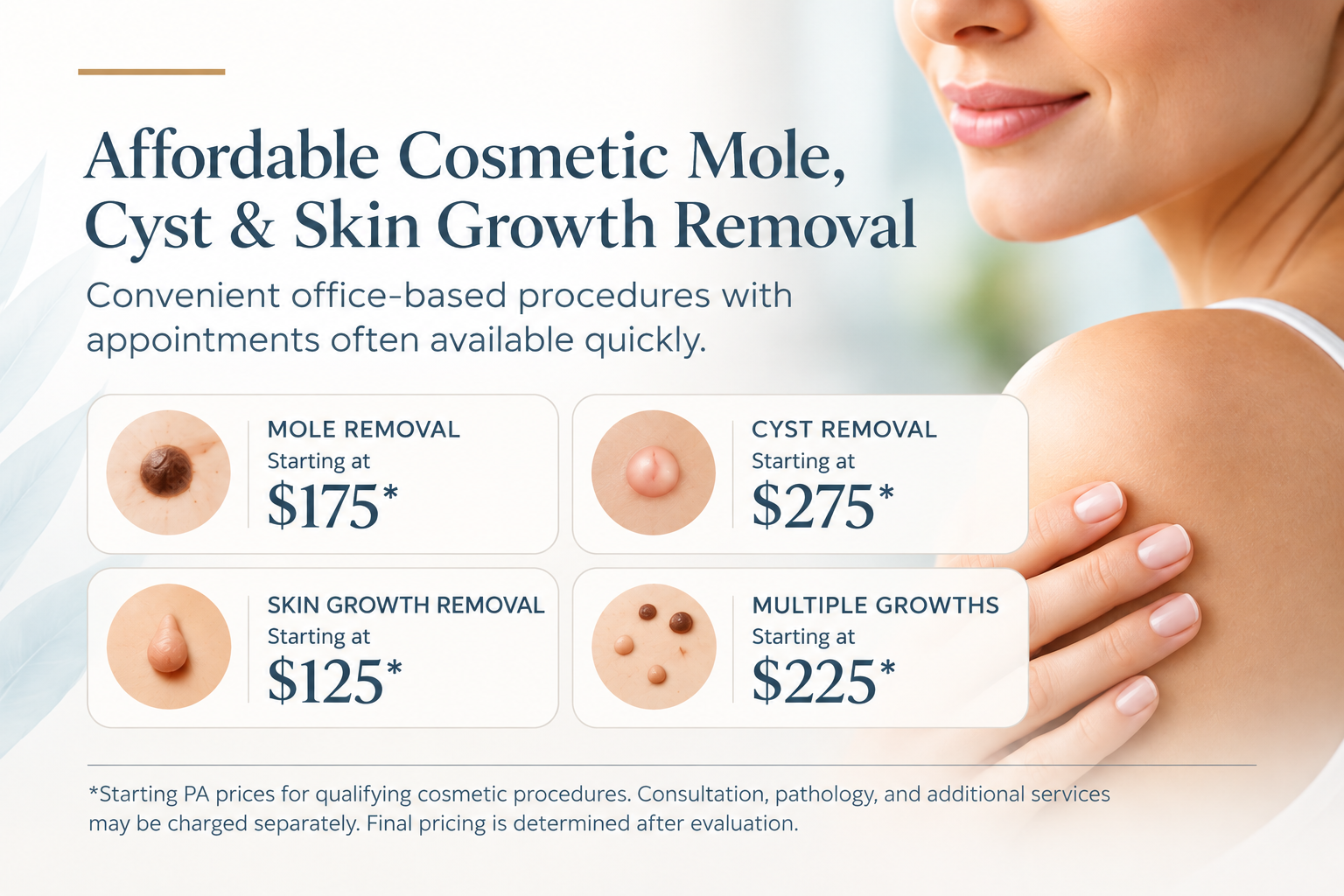
  • Approximate Cost: Cosmetic consult fee of $100 if not billable to insurance, plus cost of the actual procedure(s). A mole shave starts at $175. A mole excision starts at $275.

UNDERSTANDING YOUR CONCERN

What is a mole?

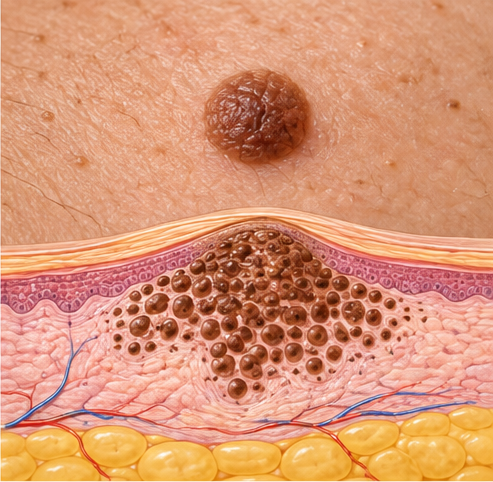
A mole, medically known as a melanocytic nevus, is a common skin growth that develops when pigment-producing cells called melanocytes grow together in clusters rather than being evenly distributed throughout the skin. Moles can appear anywhere on the body and may be present at birth or develop over time.

Most moles are harmless (benign) and do not require treatment. However, some patients choose to have moles removed because of their appearance, location, irritation, or concern about changes in the skin.

benign_mole_illustration

Moles vary in appearance and may be:

  • Flat or raised: Some moles are smooth and level with the skin, while others form noticeable bumps.
  • Different colors: Moles may be tan, brown, black, pink, or skin-colored.
  • Different shapes and sizes: Most are round or oval, although their size and shape can vary.
  • Smooth or textured: Some moles have a rough surface or contain hair.

What Causes Moles to Form?

Moles develop when melanocytes, the cells responsible for producing skin pigment, grow in clusters. Several factors influence why moles develop:

  • Genetics: A family history of numerous moles can increase your likelihood of developing them.
  • Sun exposure: Ultraviolet (UV) radiation from sunlight and tanning beds can contribute to the development of certain moles, particularly during childhood and adolescence.
  • Hormonal changes: New moles or changes in existing moles may occur during puberty and pregnancy.
  • Age: Many moles develop during childhood and early adulthood. Some may gradually fade or become less noticeable with age.

Can Moles Be Prevented?

Not all moles can be prevented. Genetics and natural skin development play important roles in their formation. However, protecting your skin from excessive UV exposure may help reduce the development of some new moles and lower your risk of skin cancer.

Ways to protect your skin include:

  • Applying broad-spectrum sunscreen with SPF 30 or higher.
  • Avoiding tanning beds and excessive sun exposure.
  • Wearing protective clothing and seeking shade outdoors.
  • Monitoring existing moles for changes in size, shape, or color.
  • Scheduling a skin examination with a dermatologist if you notice a new, changing, or unusual mole.

When Should a Mole Be Evaluated?

Although most moles are benign, changes in a mole’s appearance can sometimes indicate skin cancer, including melanoma.

Watch for the ABCDE warning signs:

  • A – Asymmetry: One half looks different from the other.
  • B – Border: Edges are irregular, uneven, or poorly defined.
  • C – Color: Multiple colors or uneven pigmentation.
  • D – Diameter: Larger than approximately 6 mm (the size of a pencil eraser), although melanomas can be smaller.
  • E – Evolving: Changes in size, shape, color, or symptoms over time.

A mole that begins bleeding, itching, crusting, or changing without an obvious explanation should also be evaluated. If you notice a suspicious or changing mole, seek prompt medical evaluation rather than having it removed solely for cosmetic reasons.

YOUR TREATMENT PLAN

The technique depends on the findings

Mole removal may involve a shave procedure or surgical excision. The most appropriate method depends on the type, size, depth, and location of the growth, as well as your cosmetic goals.

Shave Removal

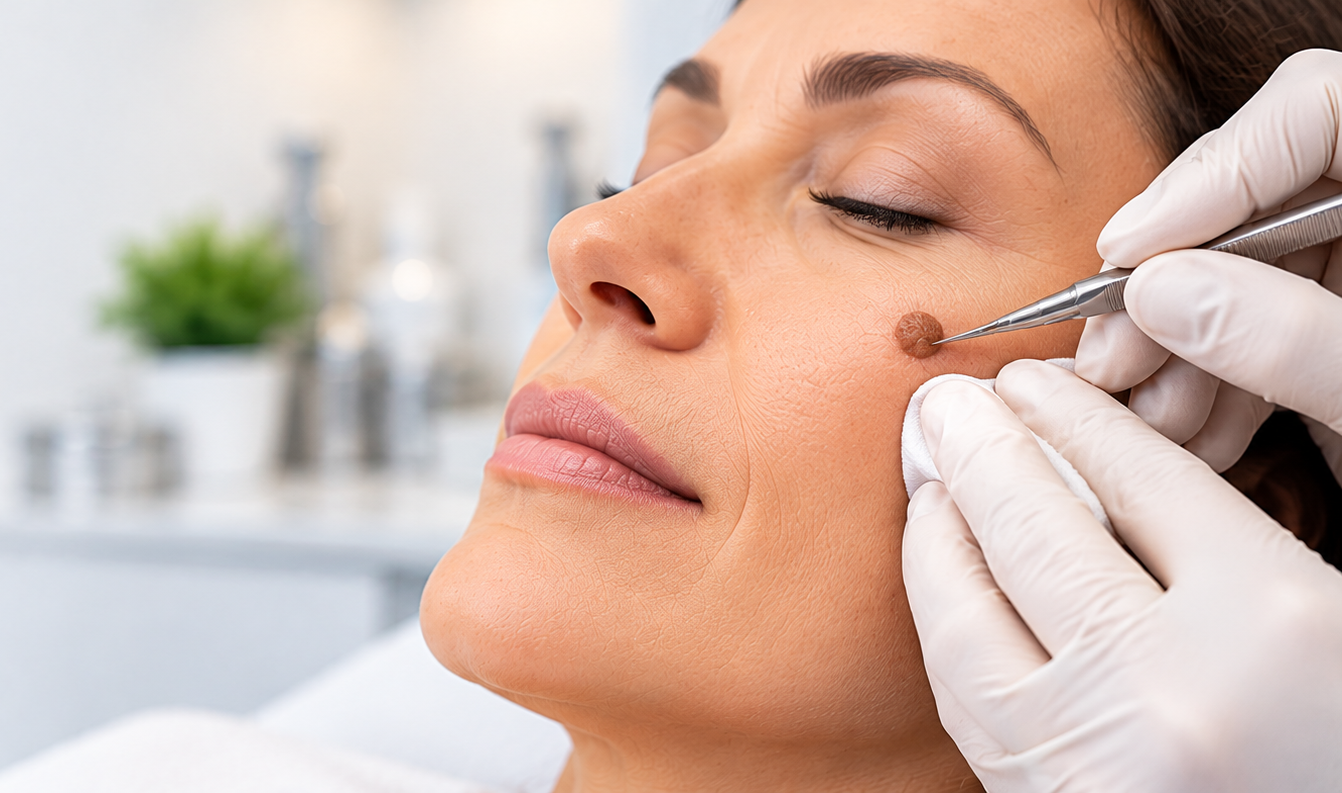
Shave removal is a minimally invasive procedure used for certain raised moles and superficial skin growths. After numbing the area with local anesthesia, the provider carefully removes the raised portion of the growth using a specialized surgical blade. Because the procedure typically does not require stitches, healing is generally quicker, with a small, superficial wound that gradually heals with new skin.

Shave removal is often less expensive than surgical excision. However, because deeper portions of the growth may remain beneath the skin, there is a possibility that the growth could return. A flat or slightly depressed scar or changes in skin pigmentation may also occur.

Surgical Excision

Surgical excision involves removing the growth through an incision that extends into the deeper layers of the skin. This technique is commonly recommended for deeper moles, cysts, and other growths that require more complete removal. After the area is numbed, the provider removes the growth and, when appropriate, closes the incision with sutures.

Although surgical excision generally involves a longer healing period and produces a linear scar, it allows for removal of deeper tissue and may reduce the likelihood of recurrence. The length of the incision and resulting scar may be greater than the size of the visible growth to allow for proper removal and wound closure.


Neither technique guarantees a scar-free result. Our providers will evaluate your skin growth, discuss the advantages of each technique, and recommend the approach that offers the best balance of effective removal, healing, and cosmetic appearance.

How Does the Removal Method Affect Pricing?

Shave removal is generally less expensive because it is less invasive and usually does not require stitches. Surgical excision typically costs more because it involves deeper tissue removal and wound closure. For excisions, pricing is based primarily on the length and complexity of the final closure rather than simply the size of the visible mole or growth. Additional charges may apply for facial locations, layered closures, or more complex procedures. Pathology fees, when applicable, are billed separately.

WHAT TO EXPECT

  • Evaluation: We examine your skin concern and discuss its history, including changes in size, appearance, discomfort, or other symptoms.
  • Treatment Planning: We review your removal options, discuss closure techniques when necessary, and determine whether pathology testing is recommended.
  • Treatment & Follow-Up: Many procedures can be performed in our office using local anesthesia. We explain what to expect during recovery, provide post-op instructions, and communicate pathology results when applicable.

Bring your medication list and any biopsy reports. Tell us about blood thinners, allergies and previous healing problems.

A changing mole should be assessed before cosmetic treatment. Do not use at-home mole-removal products or assume that laser treatment is appropriate for an undiagnosed pigmented spot.

Affordable Cosmetic Removal Pricing

INSURANCE & SELF-PAY OPTIONS

Know your costs before treatment

We accept many insurance plans and offer self-pay options. Your insurance estimate depends on the evaluation, procedure, and size and location of the growth. Pathology fees, when applicable, are billed separately.

Medically necessary treatment may be covered, subject to your plan’s terms, deductible, copay and any authorization requirements. Cosmetic removal may not be covered. Verify your provider’s network status with your insurer.

Consultation Fees & Insurance

Whether a consultation is considered medically necessary or cosmetic depends on the condition being evaluated and applicable insurance coverage.

Insurance-Based Consultations

For medically necessary conditions that may be covered by insurance, your consultation will be billed to your insurance provider. Applicable copays, deductibles, and coinsurance are the patient’s responsibility, based on their individual insurance plan.

Cosmetic Consultations

For cosmetic or elective procedures not covered by insurance, a $100 consultation fee is required. Consultation fees are non-refundable and are not applied toward the cost of treatment or procedures.

Cosmetic Fees

Performed by a Physician Assistant, a mole shave removal starts at $175, while a mole excision removal $275. Complex closures add $100-300. Additional charge for face, neck, head, and hand. Prices assume uncomplicated office-based procedures under local anesthesia.

Discounted self-pay pricing are available when multiple moles are removed during the same appointment. Two benign mole shaves start at $300, while three benign mole shaves start at $425. The first mole excision is full price, the 2nd is discounted 20%, and the 3rd and additional ones are each discounted 30%.

How Is the Cost of Removal Determined?

The cost of surgical removal is based primarily on the size of the incision and final wound closure, not the size of the visible mole, cyst, or skin growth. In many cases, the incision must be larger than the growth itself to allow for complete removal and proper closure. Pricing may also vary depending on the location of the growth, the complexity of the procedure, the type of closure required, and the selection of provider. Additional charges may apply for facial procedures or those requiring layered or complex suturing. Our providers will evaluate your condition and provide a personalized cost estimate before proceeding with treatment.
 

WHY FOX VALLEY PLASTIC SURGERY?

Medical care with attention to appearance

Jason Garrow

Fox Valley Plastic Surgery combines experience in minor surgical procedures with an understanding of the cosmetic concerns that bring patients to our practice.

Our goal is to provide an appropriate, comfortable treatment experience while paying careful attention to healing and the appearance of treated areas.

Why Patients Choose Us

  • Insurance & Self-Pay Options
  • No Referral Usually Needed
  • Same-Day Appointments Often Available
  • Surgical & Non-Surgical Options
  • Pathology Services Available
  • Convenient In-Office Procedures
  • Multiple removal techniques
  • Treatment of several skin lesions during one appointment when appropriate
  • Discounted pricing for multiple eligible cosmetic removals

Schedule a mole evaluation with Jay Garrow, PA-C, and learn which removal options may be appropriate for you.

Jay combines nearly two decades of surgical and emergency medicine experience with a personalized approach to minor skin procedures. Since 2022, he has worked alongside our plastic surgeons, assisting in surgery and managing postoperative recovery. Special interests: Skin growth removal, cysts, lipomas, wound care, and surgical healing.

Frequently Asked Questions

Can you use a laser to remove a flat mole?

We do not recommend using a laser to remove flat moles because the pigment-producing cells (melanocytes) usually live deeper in the skin layers. While a laser can technically target the pigment or resurface the area, treating a flat mole with a laser carries these trade-offs:

  • High Risk of Recurrence: Because lasers vaporize tissue from the top down, they often leave behind the deeper nest of mole cells. Over time, these remaining cells can produce pigment again, causing the flat mole to return.
  • Elevated Scarring Risk: To reach the depth required to destroy a flat mole entirely, a laser must penetrate deeper into the dermis. This increases the risk of leaving a permanent, indented scar or a patch of uneven skin texture on your face.
  • Potential for Discoloration: Laser treatment on flat, heavily pigmented spots can trigger post-inflammatory hyperpigmentation (making the area darker) or hypopigmentation (leaving a white ghost spot).

Does a changing mole mean I have skin cancer?

A change does not establish a diagnosis. It does mean the spot deserves an examination; a biopsy may be recommended.

Can you guarantee there will be no scar?

No. Removing skin creates a wound, and healing can leave a scar or color change. We discuss the expected tradeoffs before treatment.

What if a removed mole grows back?

Arrange a follow-up evaluation. Regrowth needs examination rather than another cosmetic treatment without reassessment.

Will the tissue be sent to a laboratory?

We strongly recommend pathology examination of removed growths when a specimen is obtained. It helps confirm the diagnosis. Your provider will explain when testing is medically necessary and whether declining it is appropriate. The laboratory may bill separately; ask about charges before treatment.

Will removal leave a scar?

Removing skin creates a wound, and healing creates a scar. Its appearance depends on the method, location and your healing. Your provider will discuss closure, aftercare and possible color changes. Scar-free results cannot be guaranteed.

Other Surgical Dermatology Treatments

Fox Valley Plastic Surgery provides surgical dermatology services for patients throughout Oshkosh, Appleton, Neenah, Menasha, Fond du Lac, and surrounding Fox Valley communities without a long wait time for appointment availability. Our experienced medical team evaluates and treats a wide range of skin conditions, from bothersome benign growths to lesions that may require testing for skin cancer. Many procedures can be performed conveniently in our office using local anesthesia, allowing patients to return home shortly after treatment.

Start Your journey today

Let’s discuss your next step. Get your questions answered and understand your treatment options. Call 920-233-1540.

Book a Consultation

Request Your Cosmetic Surgery Consultation

Date(Required)
Newsletter Option
Terms

By checking the box on the contact form, you agree to the Terms of Use listed here: Communications through our website or via email are not encrypted and are not necessarily secure. Use of the internet or email is for your convenience only, and by using them, you assume the risk of unauthorized use. By checking this box you hereby agree to hold , its doctors and affiliates, harmless from any hacking or any other unauthorized use of your personal information by outside parties.