A raised spot that catches on clothing or affects your confidence can be worth discussing. Fox Valley Plastic Surgery evaluates suspected seborrheic keratoses and explains your removal options.

Contact our team to arrange an evaluation with Jay Garrow, PA-C. We welcome patients from Oshkosh, Appleton, Neenah, Menasha, Fond du Lac and surrounding communities.

Seborrheic Keratosis: Key Details

  • Procedure time: 30 minutes
  • Anesthesia: local numbing may be used
  • Recovery: Immediate return to normal activities
  • Results: Immediate results. Healing may take 1-3 weeks.
  • Combination procedures: Multiple benign growths
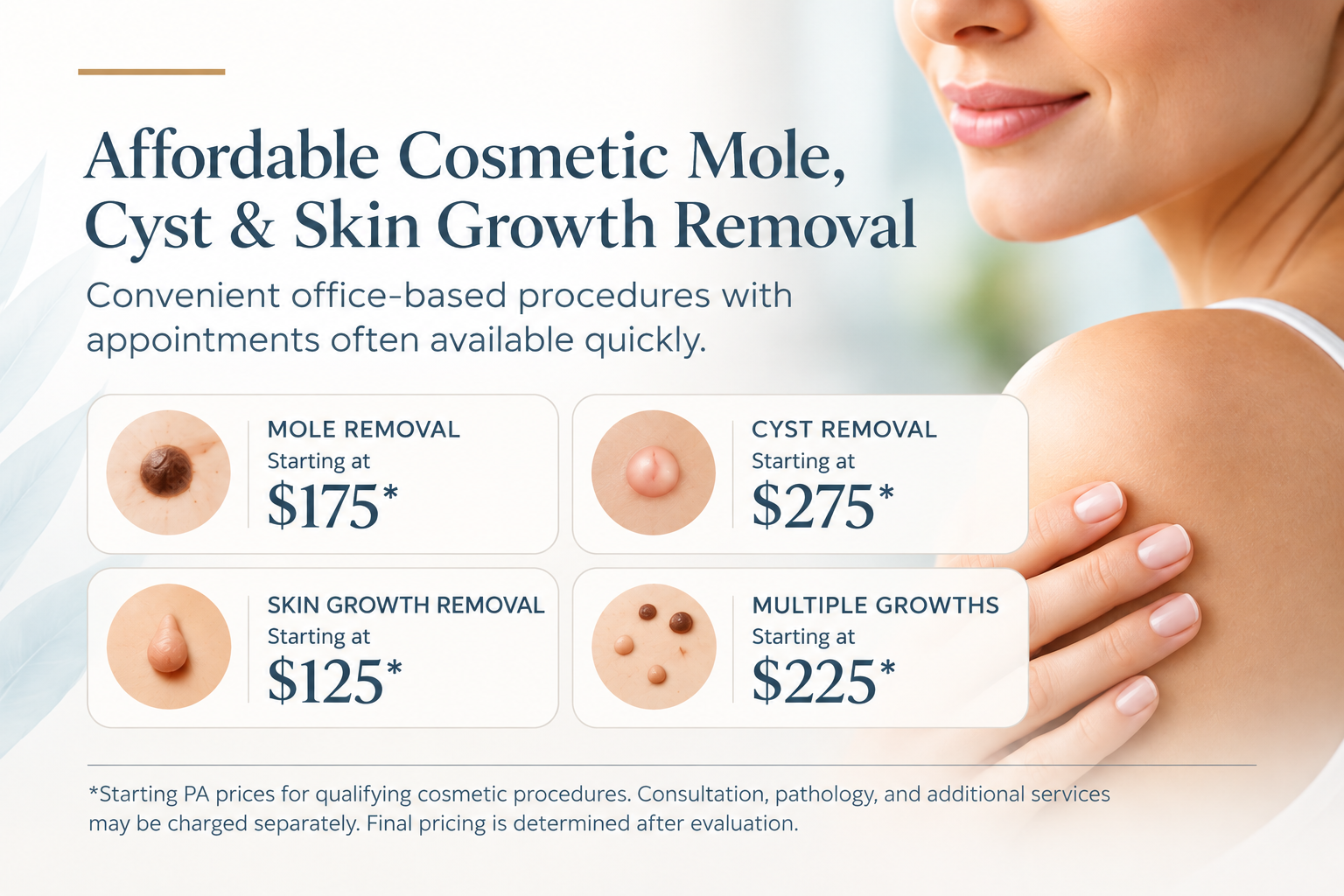
  • Approximate cost: Cosmetic consult fee of $100 if not billable to insurance, plus cost of the actual treatment(s). Starting at $125 for the first SK lesion with superficial treatments. Same day discounts for additional SK’s.

UNDERSTANDING YOUR CONCERN

What is a seborrheic keratosis?

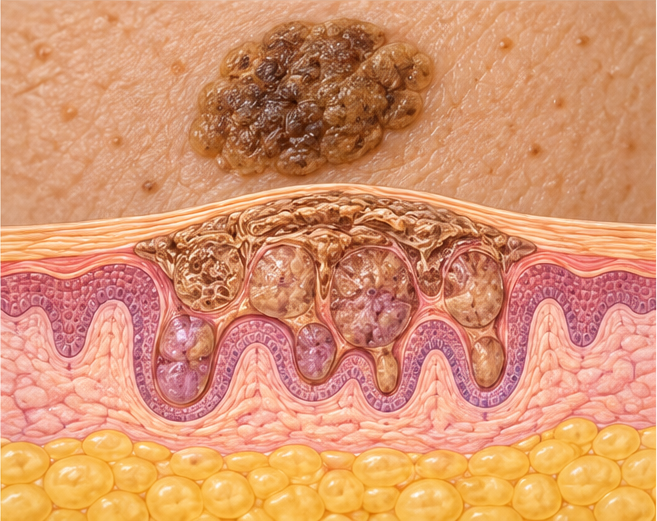
A seborrheic keratosis is a common, noncancerous (benign) skin growth that develops when cells in the outer layer of the skin multiply and gradually build up. These growths often have a waxy, rough, or slightly raised appearance, sometimes looking as though they have been stuck onto the surface of the skin.

Medical illustration of a raised seborrheic keratosis on the skin

Seborrheic keratoses are especially common in middle-aged and older adults. They can appear almost anywhere on the body, particularly the face, scalp, chest, back, and shoulders. Although harmless, some patients choose to have them removed because of irritation, discomfort, or cosmetic concerns.

Seborrheic keratoses may be:

  • Flat or raised: Some begin as small, flat spots and gradually become thicker.
  • Different colors: They may be tan, brown, black, or skin-colored.
  • Waxy or rough: Many have a scaly, wart-like, or stuck-on appearance.
  • Single or multiple: Some individuals develop one growth, while others develop numerous growths over time.
  • Different sizes: Growths may range from very small spots to several centimeters across.

What Causes Seborrheic Keratoses to Form?

The exact cause is not completely understood. Seborrheic keratoses develop through a buildup of skin cells in the epidermis, the outermost layer of the skin.

Several factors may contribute:

  • Aging: These growths become increasingly common with age.
  • Genetics: Seborrheic keratoses often run in families. Some individuals inherit a tendency to develop numerous growths.
  • Skin cell changes: Changes in the way skin cells grow and multiply contribute to their development.
  • Sun exposure: Some studies suggest UV exposure may play a contributing role, although seborrheic keratoses also develop on areas that receive little sunlight.

Unlike warts, seborrheic keratoses are not caused by a virus and are not contagious. They are also different from actinic keratoses, which are precancerous growths associated with sun damage.


Can Seborrheic Keratoses Be Prevented?

There is no proven way to prevent seborrheic keratoses from developing. Because genetics and aging play important roles, these growths may appear even in individuals who take excellent care of their skin.

However, maintaining healthy skin habits is still beneficial:

  • Protect your skin from the sun: Use broad-spectrum SPF 30 or higher sunscreen and protective clothing to reduce UV damage.
  • Avoid unnecessary irritation: Minimize repeated rubbing or scratching of existing growths.
  • Monitor your skin: Watch for new or changing spots, particularly those with unusual colors, irregular borders, or unexplained bleeding.
  • Schedule skin examinations: Have suspicious or changing lesions evaluated by a qualified medical professional.

Although sun protection is important for preventing skin damage and reducing skin cancer risk, it has not been proven to prevent seborrheic keratoses.

When Should a Seborrheic Keratosis Be Removed?

Most seborrheic keratoses do not require treatment. However, removal may be appropriate when a growth:

  • Frequently catches on clothing, jewelry, or razors.
  • Becomes irritated, itchy, or uncomfortable.
  • Bleeds repeatedly from friction or accidental injury.
  • Develops in a visible area and causes cosmetic concerns.
  • Interferes with shaving, grooming, or everyday activities.
  • Has an uncertain diagnosis and requires further examination.

A growth that changes rapidly, bleeds without injury, or looks unusual should be evaluated before cosmetic removal. Some skin cancers, including melanoma, can resemble seborrheic keratoses.

YOUR TREATMENT PLAN

Seborrheic Keratosis Treatment Options

Treatment begins with an evaluation of the growth’s appearance, size, location, and symptoms. Because seborrheic keratoses can resemble other skin conditions, our providers first determine whether the growth appears benign or requires additional testing.

When removal is appropriate, several office-based treatment options may be available.

SHAVE REMOVAL

Best for: Raised or thicker seborrheic keratoses

Shave removal involves numbing the skin with local anesthesia and carefully removing the raised growth using a specialized surgical blade. Because the growth is removed at or near the skin’s surface, stitches are generally not necessary.

ELECTROCAUTERY

Best for: Small, raised, or multiple superficial growths

Electrocautery uses controlled electrical energy to destroy unwanted tissue. The provider may also gently remove the treated growth using a curette or other surgical instrument.

CRYOTHERAPY (FREEZING)

Best for: Thin, superficial seborrheic keratoses

Cryotherapy uses liquid nitrogen to freeze and destroy the unwanted growth. Following treatment, the area may become red, swollen, or blistered before forming a crust and gradually healing.

LASER ABLATION

Best for: Selected superficial growths and patients seeking treatment of multiple lesions

Laser ablation uses focused laser energy to remove or vaporize unwanted skin tissue. Depending on the type of laser and the characteristics of the growth, treatment can be performed with considerable precision while limiting injury to surrounding tissue.

SURGICAL EXCISION

Best for: Growths requiring deeper removal or diagnostic evaluation

Surgical excision involves numbing the area with local anesthesia and removing the growth through an incision. Depending on the depth and location of the removal, stitches may be required to close the wound.


What to expect

  • Evaluation: We examine your skin concern and discuss its history, including changes in size, appearance, discomfort, or other symptoms.
  • Treatment Planning: We review your removal options, discuss closure techniques when necessary, and determine whether pathology testing is recommended.
  • Treatment & Follow-Up: Many procedures can be performed in our office using local anesthesia. We explain what to expect during recovery, provide post-op instructions, and communicate pathology results when applicable.

Bring your medication list and any biopsy reports. Tell us about blood thinners, allergies and previous healing problems.

Recovery & healing

The treated area may form a crust or need a dressing as it heals. With shave removal, temporary redness, pigmentation changes, or a flat or slightly depressed scar may occur. The growth may occasionally recur. With electrocautery, temporary redness, lighter or darker pigmentation, and occasional scarring may occur. With cryotherapy, temporary or permanent changes in skin pigmentation can occur, particularly in patients with darker skin tones. Blistering and occasional scarring are also possible. With laser ablation and excision, redness, pigmentation changes, scarring, or recurrence may occur.

Follow the instructions for your treatment and avoid picking at the site. Temporary or lasting changes in skin color can occur, and scarring is possible. Your provider will discuss these risks before you decide.

You will receive instructions specific to your care. Contact the office with concerns about worsening pain, redness, drainage or bleeding. Do not stop prescribed medications without instructions from your treating clinician.

Do not assume that every brown or raised spot is a seborrheic keratosis. A changing, bleeding or unusual growth should be examined before removal.

Affordable Cosmetic Removal Pricing

INSURANCE & SELF-PAY OPTIONS

Know your costs before treatment

We accept many insurance plans and offer self-pay options. Your insurance estimate depends on the evaluation, procedure, and size and location of the growth. Pathology fees, when applicable, are billed separately.

Medically necessary treatment may be covered, subject to your plan’s terms, deductible, copay and any authorization requirements. Cosmetic removal may not be covered. Verify your provider’s network status with your insurer.

Consultation Fees & Insurance

Whether a consultation is considered medically necessary or cosmetic depends on the condition being evaluated and applicable insurance coverage.

Insurance-Based Consultations

For medically necessary conditions that may be covered by insurance, your consultation will be billed to your insurance provider. Applicable copays, deductibles, and coinsurance are the patient’s responsibility, based on their individual insurance plan.

Cosmetic Consultations

For cosmetic or elective procedures not covered by insurance, a $100 consultation fee is required. Consultation fees are non-refundable and are not applied toward the cost of treatment or procedures.

Cosmetic Fees

Performed by a Physician Assistant, the superficial removal of a seborrheic keratosis lesion starts at $125. Additional charge for face, neck, head, and hand. Custom quote for removal by excision or laser.

Discounted self-pay pricing are available when multiple superficial removal of SK’s are performed at the same appointment. The first superficial removal of SK by shave, electrocautery, or cryotherapy is full price, the 2nd is discounted 20%, and the 3rd and additional ones are each discounted 30%. Prices assume uncomplicated office-based procedures under local anesthesia.

How Is the Cost of Removal Determined?

The cost of surgical removal is based primarily on the size of the incision and final wound closure, not the size of the visible mole, cyst, or skin growth. In many cases, the incision must be larger than the growth itself to allow for complete removal and proper closure. Pricing may also vary depending on the location of the growth, the complexity of the procedure, the type of closure required, and the selection of provider. Additional charges may apply for facial procedures or those requiring layered or complex suturing. Our providers will evaluate your condition and provide a personalized cost estimate before proceeding with treatment.
 

WHY FOX VALLEY PLASTIC SURGERY?

Medical care with attention to appearance

Jason Garrow

Your care starts with evaluating the growth and recommending an appropriate plan. When removal is recommended, we discuss the approach, closure and expected healing.

Our practice offers office-based procedural care for a range of medical and cosmetic skin concerns, with wound care guidance and follow-up. Schedule an evaluation with Jay Garrow, PA-C, and bring your questions.

Jay combines nearly two decades of surgical and emergency medicine experience with a personalized approach to minor skin procedures. Since 2022, he has worked alongside our plastic surgeons, assisting in surgery and managing postoperative recovery. Special interests: Skin growth removal, cysts, lipomas, wound care, and surgical healing.

Frequently Asked Questions

Are seborrheic keratoses cancerous?

No. Seborrheic keratoses are benign skin growths and do not develop into skin cancer. However, certain skin cancers, including melanoma, can resemble seborrheic keratoses. Any changing, bleeding, or unusual growth should be evaluated before removal.

What is the difference between seborrheic keratosis and actinic keratosis?

Seborrheic keratoses are harmless skin growths that often have a raised, waxy, or stuck-on appearance. Actinic keratoses are rough, scaly, precancerous lesions caused by long-term sun exposure. Some actinic keratoses can progress to squamous cell carcinoma. The two conditions require different treatment approaches.

Is seborrheic keratosis removal painful?

Most removal procedures are well tolerated. Depending on the technique, local anesthesia may be used to numb the treatment area. Mild redness, tenderness, or crusting may occur afterward and generally improves as the skin heals.

Can the growth return?

A treated growth may occasionally return, particularly if it was not completely removed. New seborrheic keratoses may also develop elsewhere because of aging and genetic factors.

Will removal leave a scar?

Removing skin creates a wound, and healing creates a scar. Any removal procedure can also cause changes in skin pigmentation. Many superficial treatments heal with minimal visible changes, but results depend on the growth’s size, location, treatment method, and individual healing.

Can I remove seborrheic keratoses at home?

Home removal is not recommended. Scraping, cutting, burning, or applying unapproved chemical treatments can cause infection, scarring, and skin damage. Additionally, a growth that resembles seborrheic keratosis could be another condition requiring medical evaluation.

Does insurance cover seborrheic keratosis removal?

Insurance may cover removal when medically necessary, such as for growths causing significant irritation, repeated bleeding, or other documented symptoms. Removal performed solely for cosmetic reasons is generally not covered. Coverage varies by insurance plan.

Other Surgical Dermatology Treatments

Fox Valley Plastic Surgery provides surgical dermatology services for patients throughout Oshkosh, Appleton, Neenah, Menasha, Fond du Lac, and surrounding Fox Valley communities without a long wait time for appointment availability. Our experienced medical team evaluates and treats a wide range of skin conditions, from bothersome benign growths to lesions that may require testing for skin cancer. Many procedures can be performed conveniently in our office using local anesthesia, allowing patients to return home shortly after treatment.

Start Your journey today

Let’s discuss your next step. Get your questions answered and understand your treatment options. Call 920-233-1540.

Book a Consultation

Request Your Cosmetic Surgery Consultation

Date(Required)
Newsletter Option
Terms

By checking the box on the contact form, you agree to the Terms of Use listed here: Communications through our website or via email are not encrypted and are not necessarily secure. Use of the internet or email is for your convenience only, and by using them, you assume the risk of unauthorized use. By checking this box you hereby agree to hold , its doctors and affiliates, harmless from any hacking or any other unauthorized use of your personal information by outside parties.